
From first act to final act, applause fills the theater, but few in the audience realize that the performance unfolding before them was built on thousands of hours of training.
Long before opening night, students are in rehearsal rooms breaking down lyrics, running choreography again and again and learning how to fully step into a character rather than simply play one.
For students in Montclair State’s musical theatre program, work begins in the classroom. Professors coach students scene by scene, continuously urging their students to dig deeper and always question intention, connection and emotions that come with the role they learn to embody.
Within Professor Geoffrey Doig-Marx’s class, training begins with understanding that no two students enter the program at the same place.
“Students come to us at all different levels of training,” Doig-Marx said. “I have to get them up to speed with what is being taught today and what they’re going to need in their experience out there in the world … I have to approach each student as an individual.”
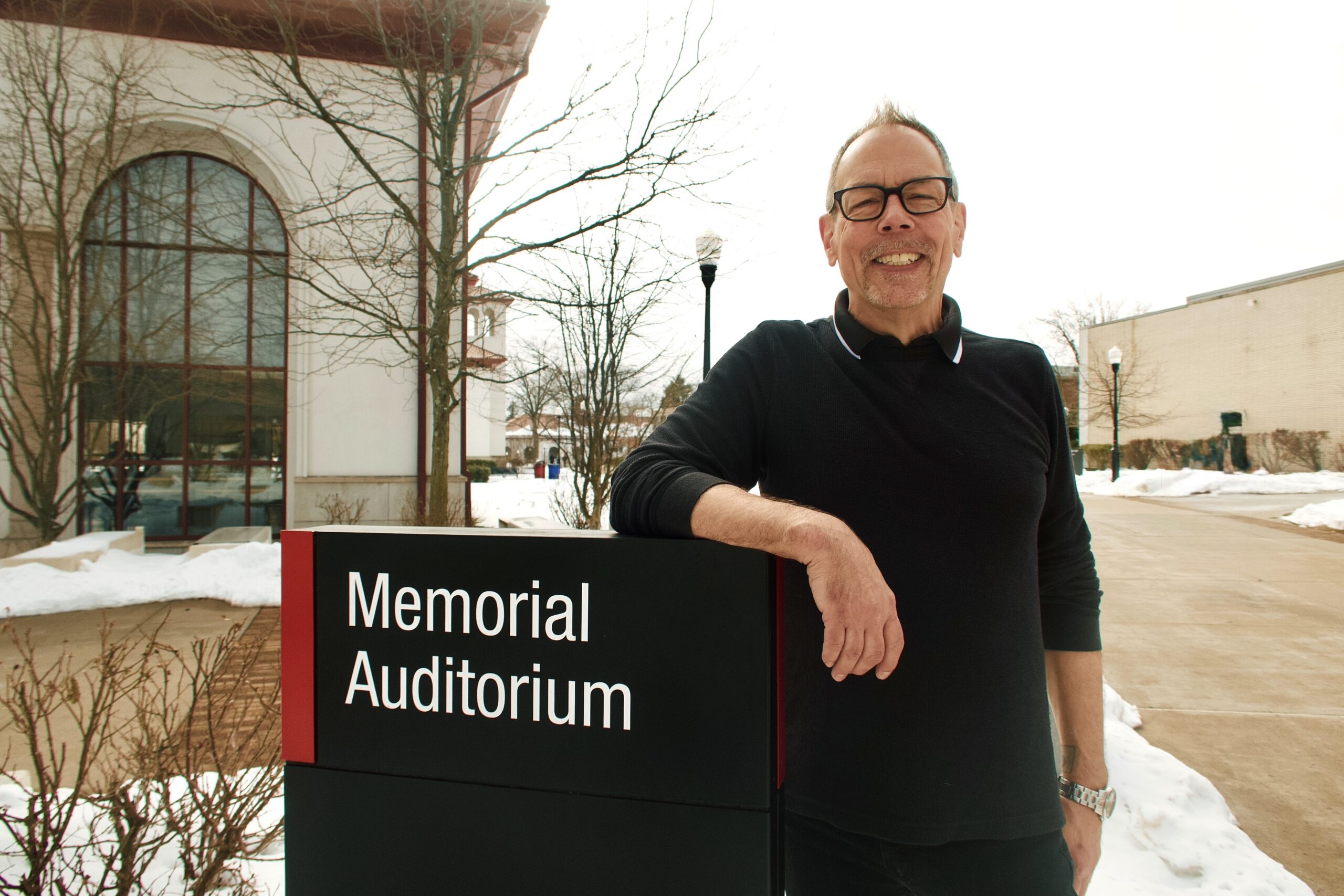
Professor Geoffrey Doig-Marx, Professor of Performing Arts specializing in dance within Montclair State University’s Musical Theatre program. Arianna Czaplicki | The Montclarion
With a department full of sizable talent, the real spark of a star comes in a student with technique. To Doig-Marx, for students to move from ‘performing for the audience’ to truly living within the scene.
“They have to have the technique and they have to tell a story,” Doig-Marx said. “Nobody in the audience is going to say, ‘What a beautiful grand rond de jambe.’ They’re going to say, ‘Oh my God, that scene was so beautiful.'”
Alexander Tom, a department professor, further emphasizes the importance of technique for professional growth.
“Sometimes people think that talent will get you very far,” Tom said. “We’re here to [say], it’s talent and technique. You have to be able to learn your craft in order to make this a sustainable career. Talent will get you quite far, but it might be unstable in how it happens, and we are about creating stable work for ourselves.”
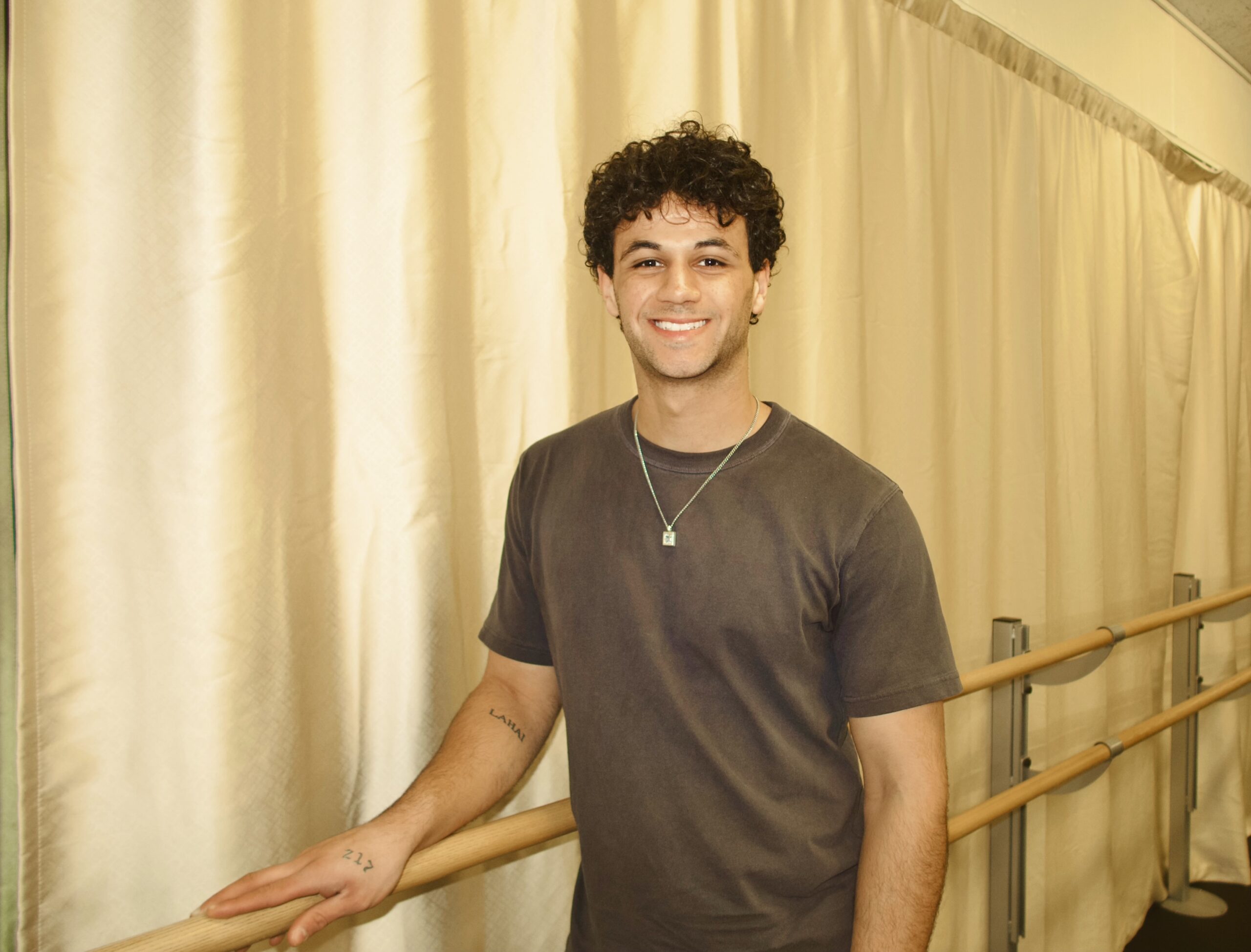
Sophomore BFA Musical Theatre Major Zack Dooley, most recently known for his role in the Montclair State Theatre production "Assassins" as Lee Harvey Oswald. Arianna Czaplicki | The Montclarion
So where does technique begin? For sophomore Zack Dooley and many other musical theatre students, it starts with preparation outside the class.
“As far as getting to the theater, I like to get there early enough so that I can start my prep,” said Dooley. “I kind of divide it into three sections: mental, physical and vocal. Physically, I am warming myself up. If I’m doing any dance, I do some form of stretching. Mentally, making sure I’m getting my head in the right place and then vocally, making sure I’m warmed up and I’m ready to go.”
With that level of preparation also comes a constant push not to be perfect but to keep growing and improving. Junior Mei Tulagan explained that settling is never really an option.
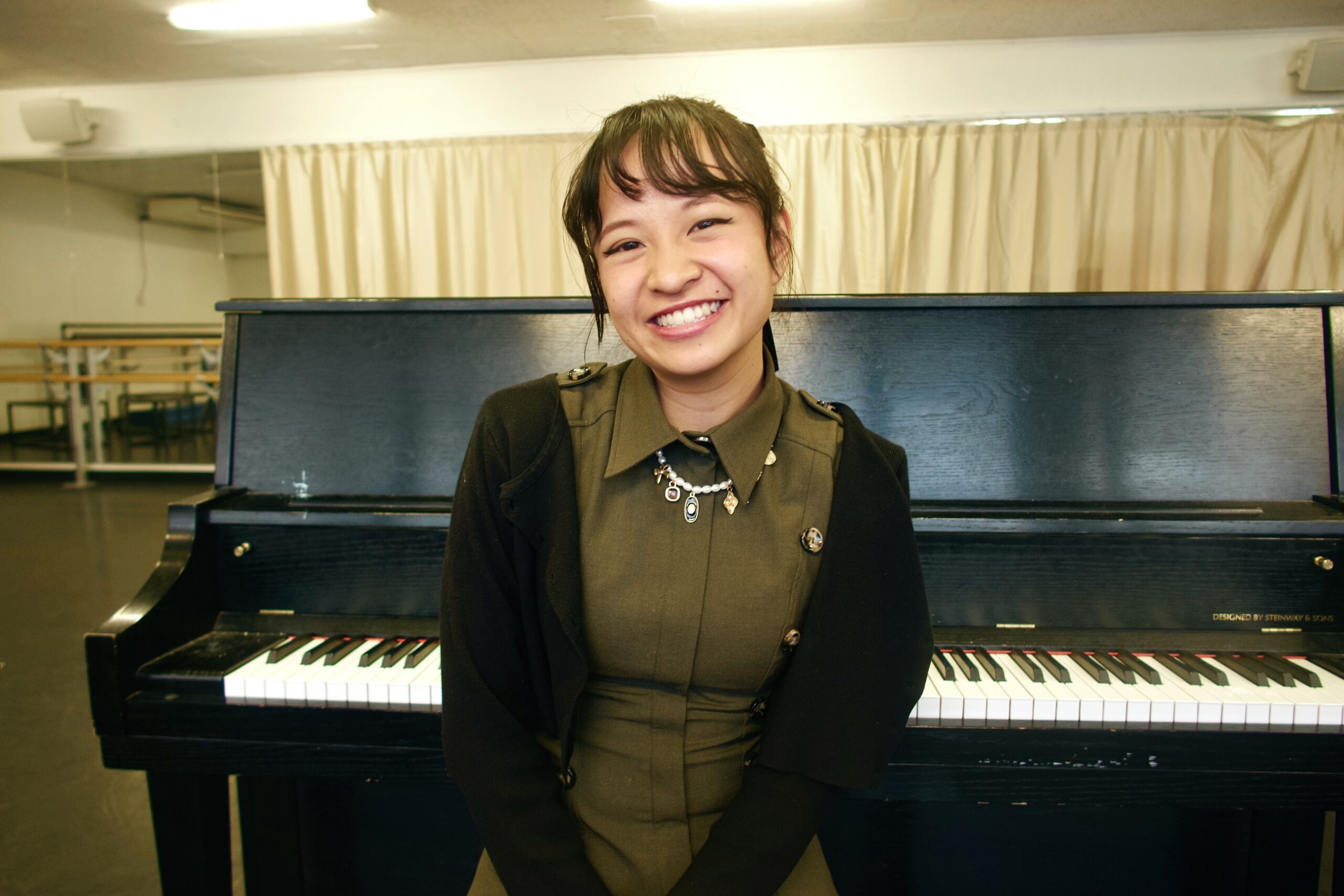
Junior BFA Musical Theatre student Mei Tulagan, recently known for her role in the production “Assassins" as Lynette 'Squeaky' Fromme. Arianna Czaplicki | The Montclarion
“We never want to settle, because once we settle, it becomes boring to the audience and to us,” Tulagan said.
Tulagan added that Professor Peter Flynn often reminds students that “there’s no there, there,” a phrase that can feel abstract at first, but over time, students begin to understand that there’s always something deeper to explore and stronger to refine.
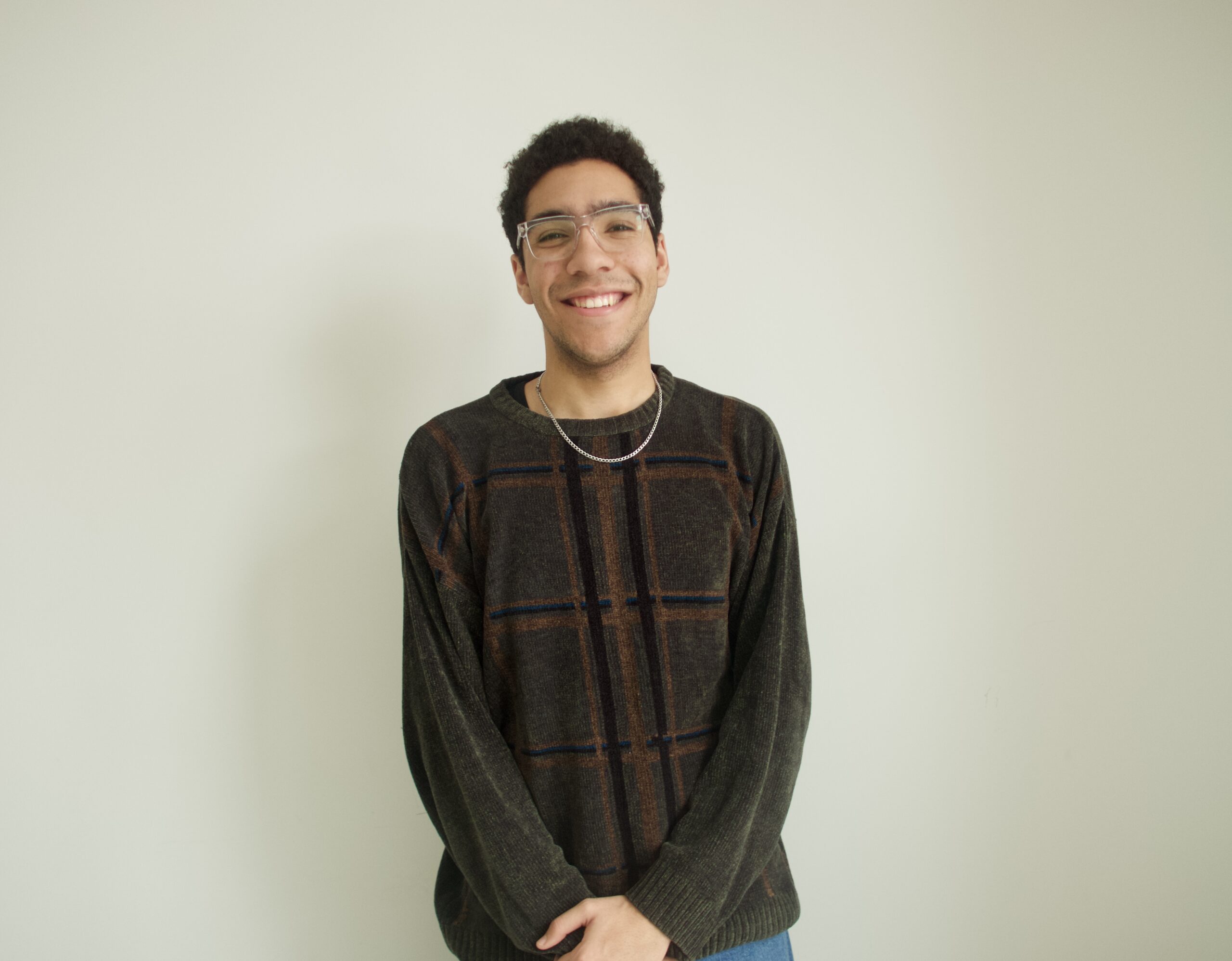
Lorenzo Hilliard, a freshman BFA musical theatre major, most recently known for his role as 'Alf' in "Peter and the Starcatcher." Arianna Czaplicki | The Montclarion
Freshman Lorenzo Hillard elaborated on the creatively challenging nature of the theatre department.
“I love when nothing is really set in stone, and people are open to change,” Hilliard said. “That’s always fun as a performer, to think about how I can try to make change and be exciting while learning something at the same time. It’s so collaborative.”
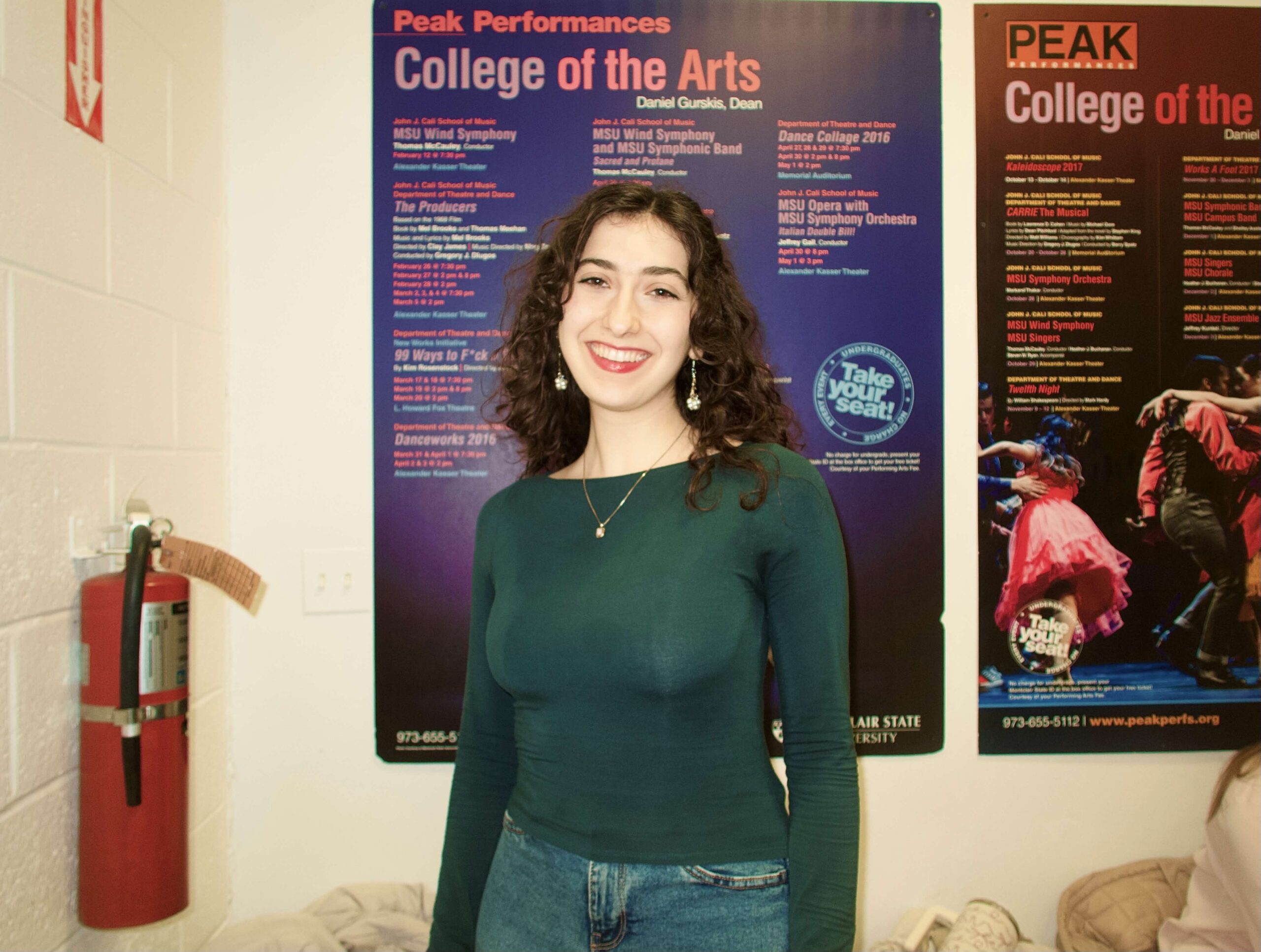
Senior BFA Musical Theatre Major Mia Grizzuti, most recently known for her role in the production "Assassins" as one of the Balladeers. Arianna Czaplicki | The Montclarion
For senior Mia Grizzuti, some of her most defining moments came from that collaboration and emotional vulnerability with her castmates.
“I did Spring Awakening my sophomore year,” Grizzuti said. “We did some really heavy scene work, and when we first sang through that, it was a big emotional experience for all of us, but we all had to make it one big piece of art. We all go to a deep place at the same time and then share, act and learn together how to portray it in a way that’s understandable for an audience.”
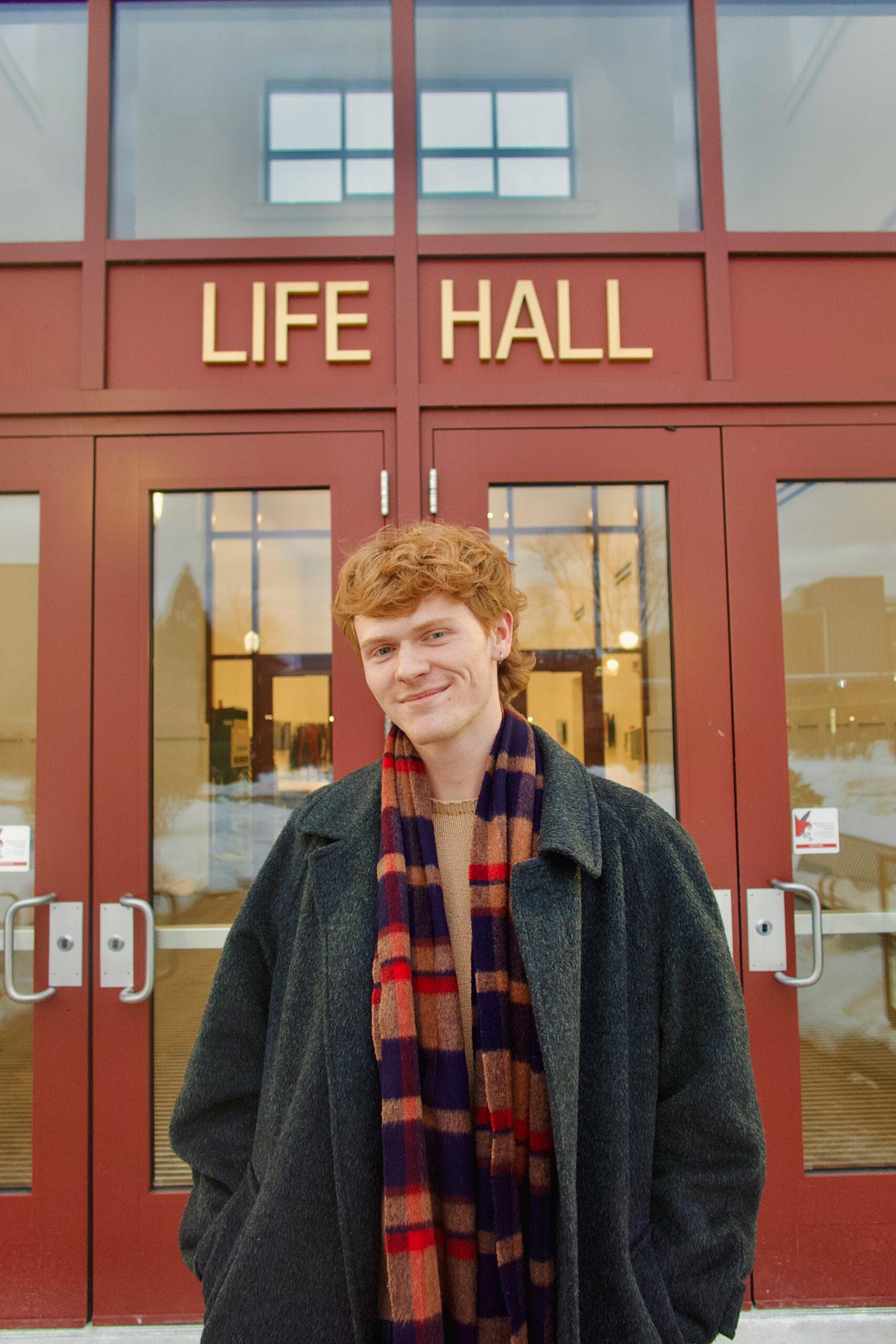
Jack Gemmell, junior BFA Musical Theatre Major known for their most recent role in "Assassins" as Charles Guiteau. Arianna Czaplicki | The Montclarion
Through challenging moments, students emphasize the importance of peer support, said junior Jack Gemmell.
“Connecting behind the scenes is really important,” said Gemmell. “You do that really hard scene, and you go offstage, and you do 10 jumping jacks together, and you hug each other. That is how you ground yourself back to what is reality.”
“The one thing it takes is a village, and what is so beautiful about that village that comes together is that we want to be there,” Gemmell said. “Just like an audience has to choose to come to the show, they are also a part of the village. You can’t do a show without an audience, because it’s an exchange of energy. It bounces off each other and brings the stage to life.”