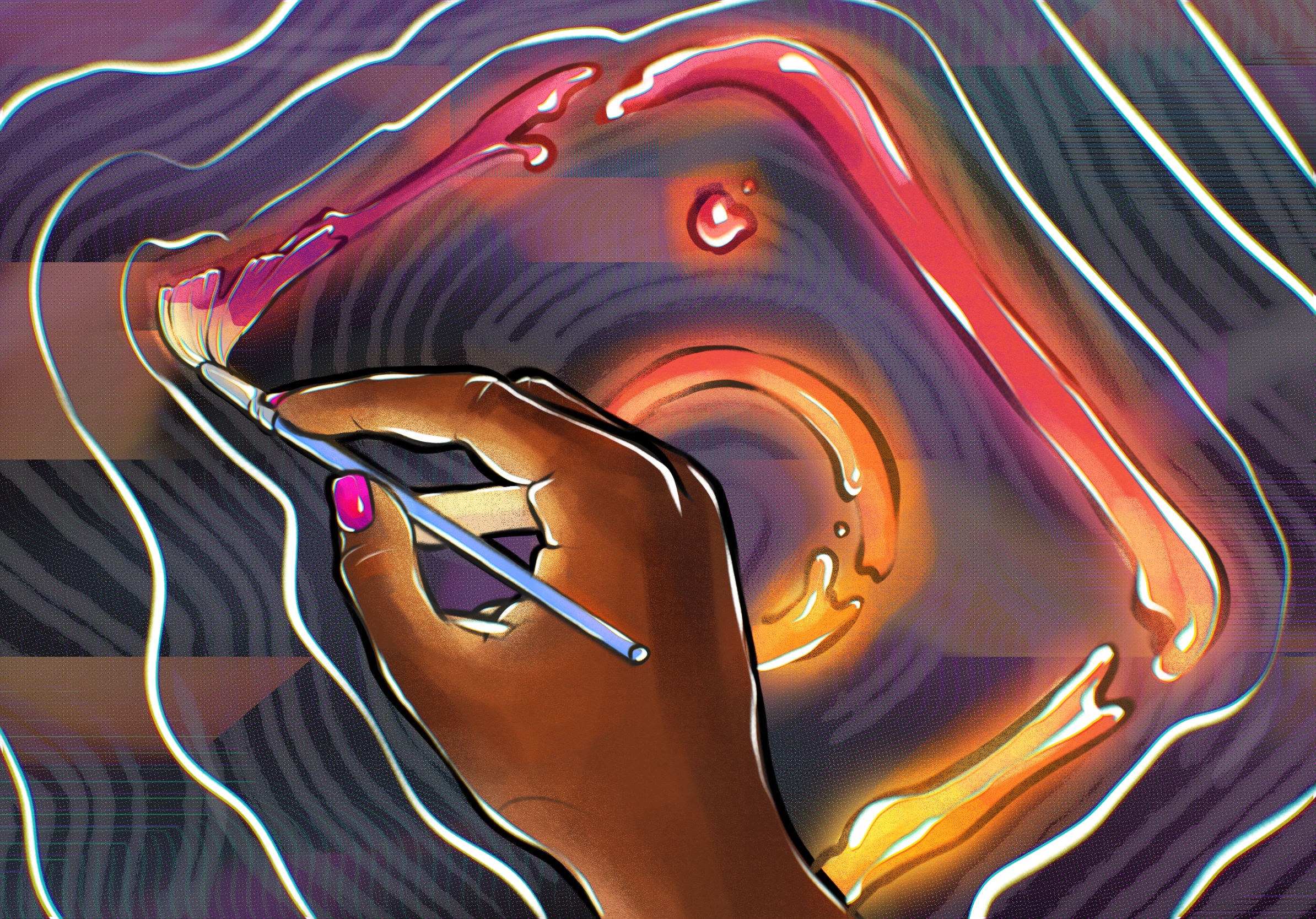
Illustration by Camila Garcia
On June 26, 2024, Instagram allowed Meta AI to use artists’ original work to train its AI. This decision brought a tidal wave of backlash against the digital platform for scraping (extraction and analysis of data from websites) their work without consent. A year later, AI has only proliferated across the internet. “AI Slop” is now found on YouTube, Instagram feeds and even music streaming platforms. Artists have virtually no say in what the company decides to do with their work.
There is no easy method for artists to opt out of Meta AI’s usage. After attempting to decline AI extraction in settings, the user is told that the company must review the request — strange, considering that Meta only uses this procedure for blocking and reporting other accounts. Both of which are comparatively more serious than opting out of a setting.
Making an art account private is counterintuitive for artists trying to gain more exposure for their work, and deleting posts does not necessarily mean that the work is protected. According to True Grit, a digital texture supply site, AI can still use the content that existed before it was deleted.
Art and design site Creative Bloq writes that artists tried pushing back by “publishing posts and stories on Instagram to declare ownership of the copyright of their work.” However, these posts do not supersede the terms and conditions users agree to in order to use the app.
In light of these barriers to avoiding AI, many artists have migrated to other platforms like Tiktok, Pinterest or Cara. Cara differs from other social media because it prohibits AI-generated content and uses AI detection technology. Artsology, an art blog, describes Cara as a “safe haven for artists” that promotes a sense of community and engagement.
Another way artists are battling AI is by utilizing local, in-person art exhibits to showcase their work. The local Union City area near my home often offers many opportunities for artists to showcase their talents to the community and we love supporting them!
The landscape for careers in the art field has been significantly impacted by the rise of AI. Fortunately, we haven’t seen any design jobs being eliminated thanks to AI just yet, but the conventions of design roles are changing. Some traditional designers are expected to incorporate GenAI into their creative process. These expectations transfer the responsibility of creativity to GenAI and, in some cases, leaves artists merely selecting from a pool of existing AI rendered visuals.
This impact has trickled down into art courses here at Montclair State. In response to the rise in AI, in one design class, professors instruct on how to use AI to facilitate brainstorming while students continue to create visuals without AI.
The growing acceptance of AI art replacing work done by real, human artists is concerning. Artists hold a completely rational fear of companies relying solely on AI which would make art and design roles obsolete.
Generative AI does not only put the integrity of visual art in jeopardy, but other forms of creative expression too. For example, many writers are worried that their fiction will be threatened by AI.
As of now, Generative AI can only superficially mimic writing and use that to generalize and categorize people’s complex experiences. An LA Times article contemplates this problem, arguing, “Generative AI, unchecked by the needs of humans… could gravitate to what’s already been done frequently through human history — the cruel bigotry, the brutal wars, the crushing oppression — rather than what we might otherwise imagine in languages of our own.”
One thing Generative AI cannot compete with is human authenticity. The sincere emotion present in art that reflects one’s lived experience, has moved human beings for centuries. Moreover, everything AI generates is built upon the work of a talented human being.
We must encourage everyone, not just artists, to continue pushing for strict copyright laws to support artists both online and in our communities. All of us have experienced the thrill of a favorite song, the satisfying warmth in a lovely painting, or the magic of a good book. Visit bookstores and local art shows and please, please don’t use AI to generate art.