
Growing up is easy enough when everyone is growing in the same direction. The harder part is figuring out what happens when they aren’t.
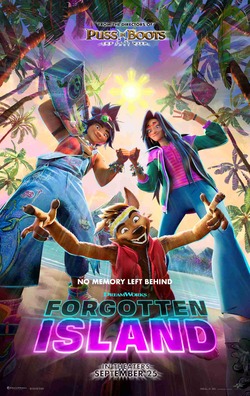
“Forgotten Island” is a colorful, heartfelt adventure about friendship, memory and the uncertainty of what comes next. Set in the Philippines, the animated film follows Jo (H.E.R.) and Raissa (Liza Soberano) — lifelong best friends facing an impending separation after Raissa is accepted into an American university.
Before they can confront what their separation might mean, however, they stumble into the mystical world of Nakali, where they find themselves surrounded by creatures from Filipino mythology and faced with a painful catch: finding their way home could cost them the memories of their friendship.
Its premise gives “Forgotten Island” plenty of room for spectacle, but its strongest moments come from something much more ordinary: friendship. At a first glance, Jo and Raissa make an odd pair. Jo is chaotic and happy-go-lucky, while Raissa is studious and structured. Despite their differences, their friendship never feels forced. H.E.R. and Soberano capture their dynamic well, making the friendship feel real.
The film’s imagination is more apparent in its visuals. “Forgotten Island” is full of color and texture, with an aesthetic that feels distinctly Filipino. The backgrounds are rich and alive in both the ordinary world and the magical one. The Philippines feels warm and familiar, while Nakali is deliberately unfamiliar, wrapped in an iridescent glow that gives the world a dreamlike quality.
These visual elements create a world that feels Filipino without having to announce itself as such. One of the film’s most refreshing qualities is that it doesn’t constantly stop to explain itself. Filipino cultural elements are allowed to exist on their own terms.
The sun on the Philippine flag, for example, becomes the shape of the portal that transports Jo and Raissa into Nakali. The mythology is integrated into the world rather than presented as a cultural lesson for an outside audience.
That same care extends to the film’s soundtrack and animation which makes room for different generations. Songs and artists popular with younger Filipino audiences, including SB19, BINI and KATSEYE’s Sophia Laforteza, sit alongside classic hits like Journey’s “Don’t Stop Believing” and INXS’ “Never Tear Us Apart.”
There’s something for kids, parents and everyone in between. The shifts in animation styles similarly tap into nostalgia for the 2D animation many older viewers grew up watching.
The mythology is particularly effective when the film’s creatures are given room to be complicated. The Manananggal or Manang (Lea Salonga) is frightening, but she feels less like a generic villain than someone in conflict with herself. Dave Franco’s Raww, Jo and Raissa’s goofy were-dog tour guide, is certain to become a fan-favorite. But beneath his comic relief is a surprising loneliness that makes his attachment to them feel more meaningful.
The film’s supporting characters, including Jenny Slate’s Batiba and Manny Jacinto’s Bungi, are similarly memorable, even if they receive less room to develop than they deserve.
That unevenness becomes more apparent in the way the film handles cultural language. “Forgotten Island” is an important step for Filipino representation in Western media precisely because it avoids the mockery and exaggeration that have often accompanied portrayals of Filipino culture. But respectful representation is not necessarily complete representation.
At times, the film seems to anticipate what a global audience will understand and adjusts itself accordingly. “Nakali,” shortened from nakalimutan, is easier to remember, but the choice also feels like a simplification. The same goes for referring to turon as “banana lumpia,” a distinction that may go unnoticed by viewers unfamiliar with Filipino food but is difficult to miss for those who are.
The occasional awkward use of Tagalog has a similar effect. Phrases like “Tayo na” don’t always sound natural, while the pronunciation of “bungi,” meaning toothless, loses its comedic effect when the word is pronounced incorrectly. These are small details, but cultural representation often lives in small details. They suggest a film made with genuine affection for the Philippines, but the perspective of people who have inherited its stories rather than lived them.
Still, “Forgotten Island” succeeds where it matters most. It’s entertaining, visually striking and rooted in a friendship that feels genuine. More importantly, it presents Filipino culture as something vibrant and worthy of being seen, rather than something that needs to be translated into a caricature for a Western audience.
The film doesn’t quite explore that culture as deeply as it could have, but it opens the door. And for Filipino representation in Western animation, that door matters.