
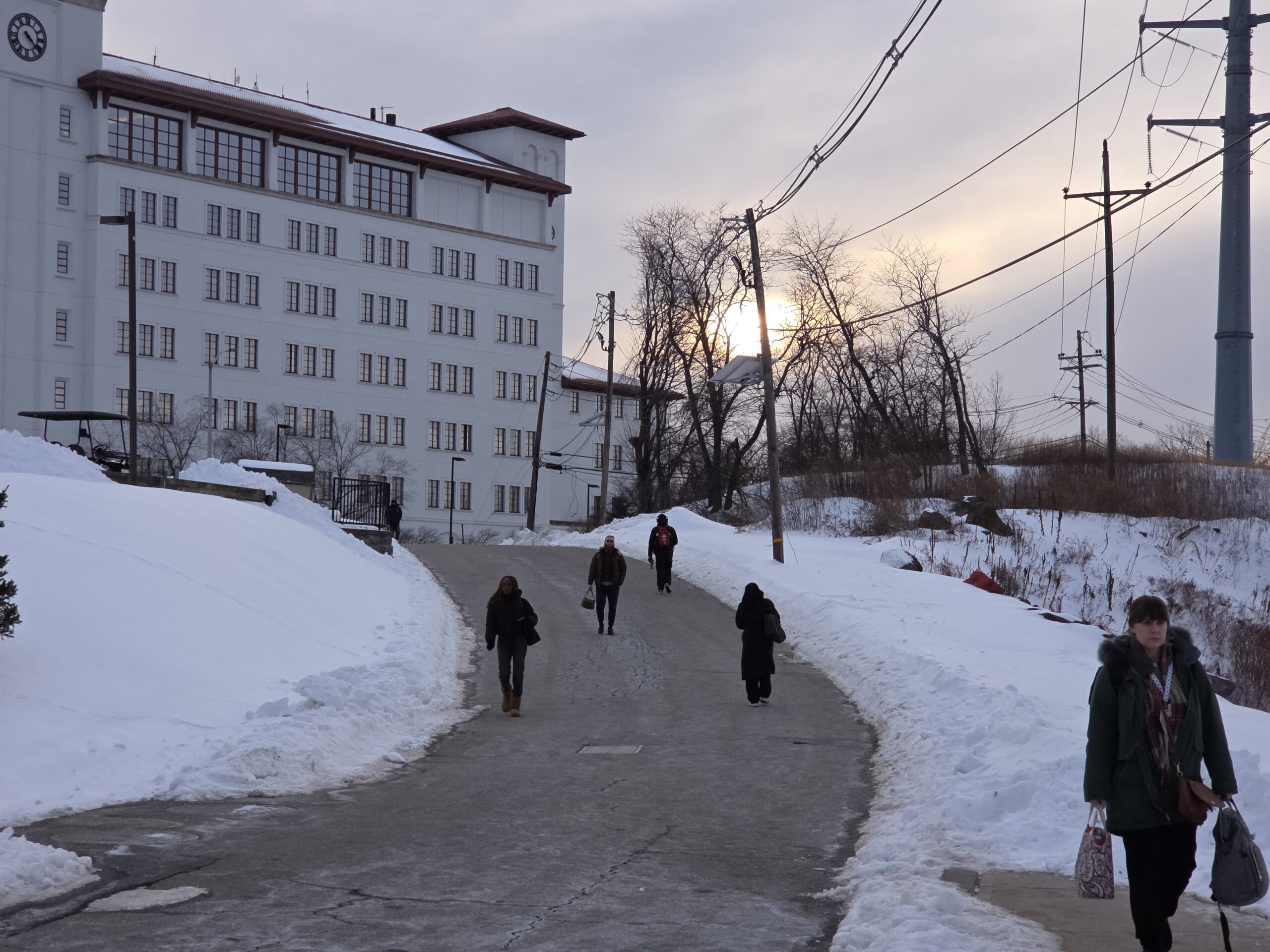
As winter weather persists, university officials are urging students to stay alert and prepared.
Timothy Fox, university police chief, reminded the campus community to monitor university emails and text alerts during winter storms.
Amid blizzard conditions that leave the entire state in a state of emergency declared by Governor Mikie Sherrill, Fox noted several important reminders during snowy conditions, calling vigilance “extremely important” for safety.

Pipe bursts or hazardous storm conditions should be reported to University Police at 973-655-5222. Thomas Boud | The Montclarion
“If you must travel during a storm or during cleanup operations, remain aware of your surroundings,” Fox said. “Stay on sidewalks and avoid roadways whenever possible. Pedestrians must recognize that vehicles, especially plows and inexperienced drivers, can not stop quickly on snow or ice, so you might need to wait for those vehicles to pass before crossing a street.”
Fox emphasized importance of following winter storm parking procedures. When parking restrictions are put in place, vehicles must be moved to designated locations, such as Car Parc Diem, Red Hawk Deck, NJ Transit Deck or the designated parking area on Bloomfield campus.
This procedures allow facilities staff to plow more efficiently and prevent vehicles from being buried.
Fox said winter storms also increase police activity, including motor vehicle accidents, fire alarms related to smoky conditions, slip and fall injuries, sledding injuries and mental health related calls.
Fox cautioned against people riding sleds in roadways, calling the practice “a serious safety risk.”
University police also responds to pipe ruptures, heating system failures and power outages. Fox shared that any pipe bursts or hazardous storm conditions be reported to university police at 973-655-5222.
In any storm threat, university police monitor daily weather forecast up to 10 days in advance. Senior university leadership, including Fox and the director of emergency planning meet days before potential storms to discuss preparations.
“Over the next few days, we continue to monitor the track of the storm and take all factors into consideration in order to make the most appropriate decision for the university,” Fox said. “We anticipate, plan, prepare and implement measures such as parking restrictions, delayed openings, or even closures so the university is in the best possible position to operate safely or manage the impact of the storm.”
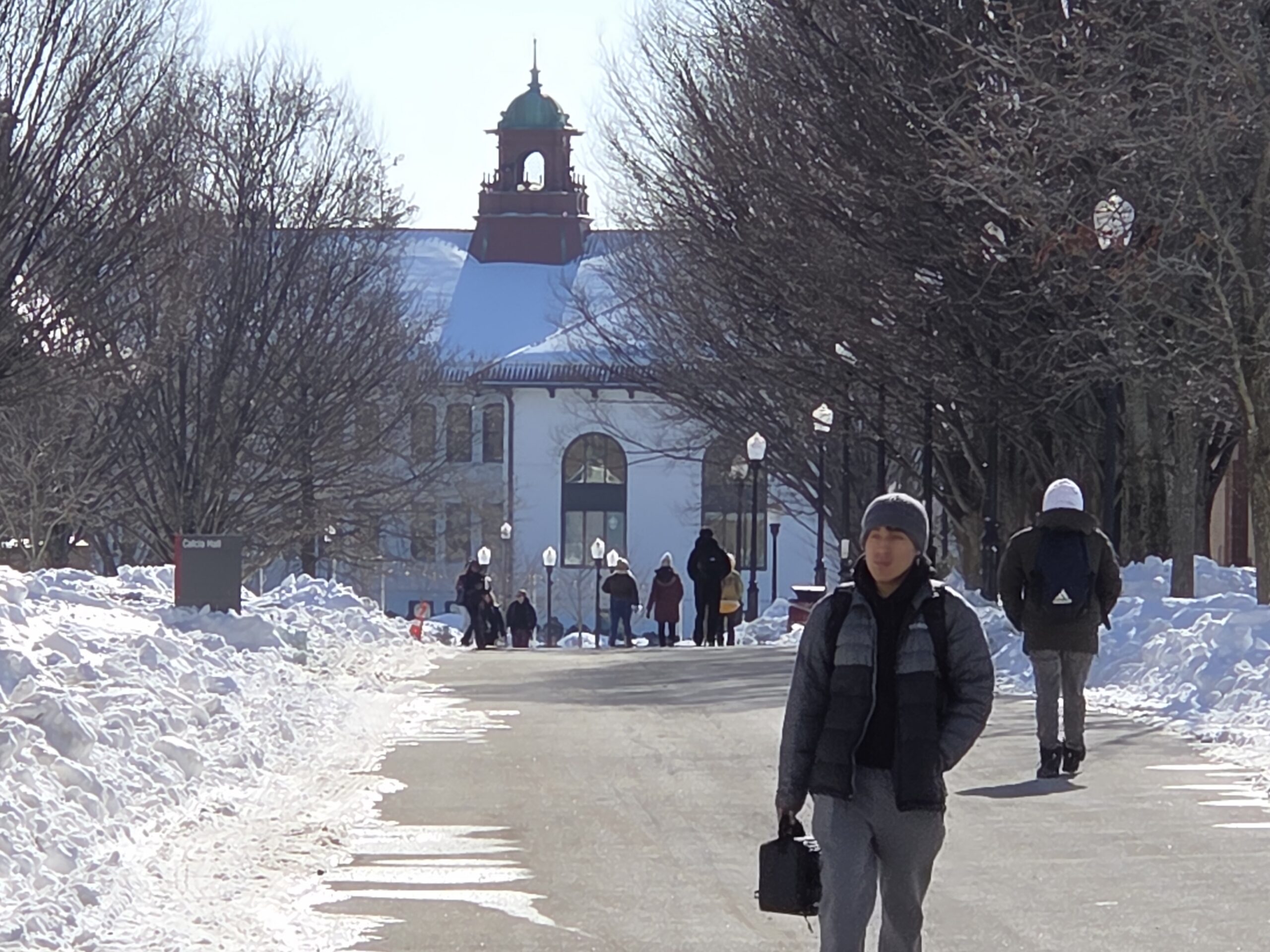
Students walk along a snowbank flanked University Promenade with Cole Hall in the background. Thomas Boud | The Montclarion
The final decision to delay or close the university rests with Montclair State University president, Jonathan Koppell. According to Fox, Koppell weighs all pertinent perspectives and information before reaching a conclusion.
Fox said Koppell listens closely to the advice of public safety and his leadership team.
“He [Koppell] tours the campus and adjacent areas to see conditions first-hand,” Fox said. “The president considers multiple factors to ensure decisions are informed, thoughtful and appropriate for the university community.”
The division of university facilities also prepare extensively for snowstorms. With nearly 200 tons of environmentally sensitive salt and more than 20 plow-capable vehicles.
According to Elyse Fernandez, university director of media relations, university facilities have 25 snowblowers and two dozen power shovels at its disposal.
“When a winter storm approaches, the University Facilities team quietly begins preparing long before the first snowflake falls,” Fernandez said. “Other winter patterns present different obstacles; freeze-thaw cycles that create overnight ice. On those mornings, crews arrive before dawn; inspecting every roadway and walkway and treating surfaces before the campus community ever wakes.”

Grace Lasizer, a junior nutrition major, said she thinks the university does a good job handling snow and ice removal. Thomas Boud | The Montclarion
Grace Lasizer, a junior nutrition major, said she thinks the university does a good job handling snow and ice removal.
“I think they’re pretty good,” Lasizer said. “I think the roads are salted, and stuff like that. The sidewalks are salted, so I think preparation on campus are pretty good.”
Lasizer also said she takes winter weather warnings seriously.
“I’m a commuter, I definitely take into consideration how bad the roads are, and I try to plan ahead,” Lasizer said. “If the roads are really bad, and the professor still wants to hold class, I’ll let the professor know that I don’t think I can get to campus safely. I’m not confident in my abilities to make it safely, so I’ll opt out of showing up to in-person classes.”