
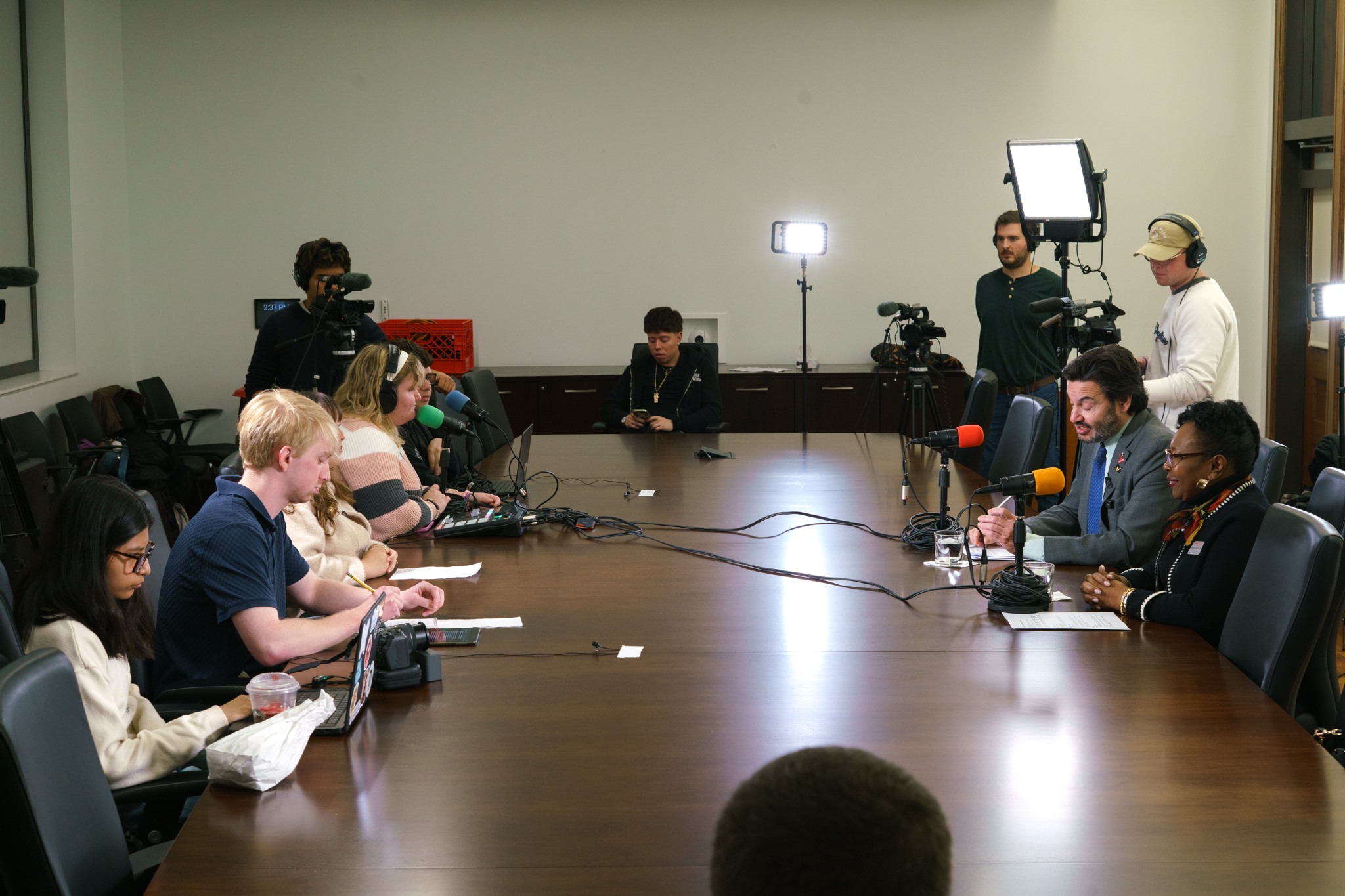
On Friday, Nov. 13, Montclair State University President, Jonathan Koppell was joined by Interim Vice President of Student Development and Campus Life, Margaree Coleman-Carter, for their semesterly conference with student media organizations.
The administrators spoke with representatives from The Montclarion, NewsLab and WMSC 90.3FM about campus projects, funding, artificial intelligence (AI) and other campus issues.
Koppell addressed concerns that campus infrastructure and facility upgrades have taken priority over improvements to student residence halls.
“We’ve been very intentional about allocating resources to the upkeep of our academic and other facilities,” Koppell said. “Does that mean that we’re always able to do everything that we want to do? No. There are certain things that we would like to update, there are certain things we would like to upgrade and we have a capital plan that lays out for the next 10 years where we hope to spend money.”
The president highlighted the fact that Montclair State does not face the same level of deferred maintenance as other universities in the state.
“We’ve been very attentive to our facilities,” Koppell said. “If you compare Montclair to other universities in the state, what you’ll often hear about is universities with massive deferred maintenance budgets. If you look around, you’ll see these totals: $80 million, $90 million, $100 million in deferred maintenance. We’re not in that category.”
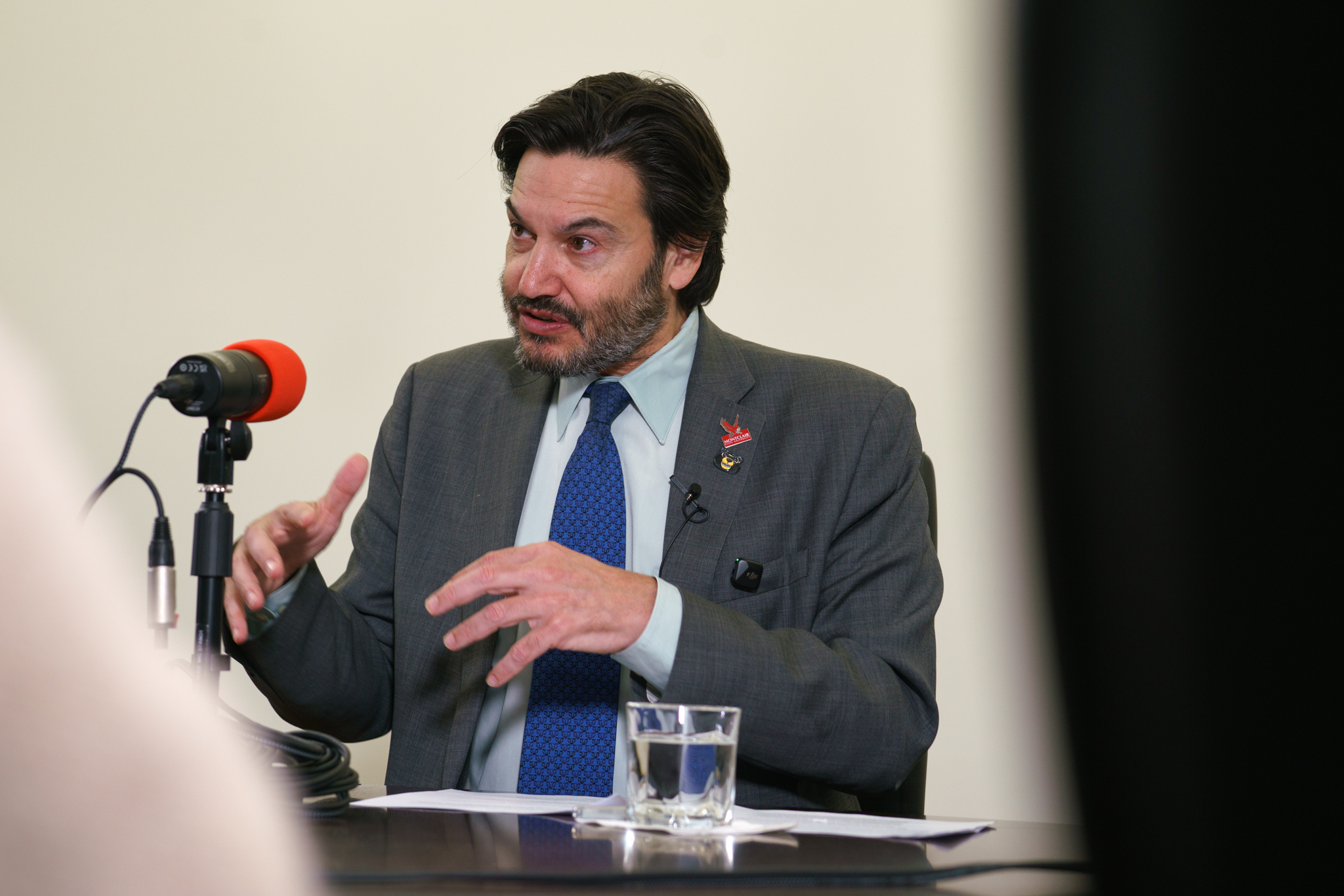
Montclair State University President Jonathan Koppell spoke to student news organizations about safety, dining, and funding.
Jamiel Negron | The Montclarion
The university has continued investing in both long-term and short-term campus upgrades, including its most notable recent project, the Interdisciplinary Science Building, a $120 million project financed by state capital. The facility aims to expand capacity for STEM programs currently limited by space in Richardson Hall.
Koppell discussed the building’s purpose and the university’s hopes for the investment.
“We are the top producer of underrepresented STEM talent in the state and those programs are basically reaching max capacity because of the limitations in Richardson and other teaching laboratories,” Koppell said. “[The building] is going to allow us to continue to innovate in the way that we teach and I think it’s going to make sure the quality of education we offer at Montclair [State] five [and] 10 years from now will be as good as, hopefully better than, it is today.”
Koppell also mentioned campus improvements outside of STEM, including new practice rooms in Freeman Hall and upgrades to the College of Communication and Media to accommodate NJPBS.
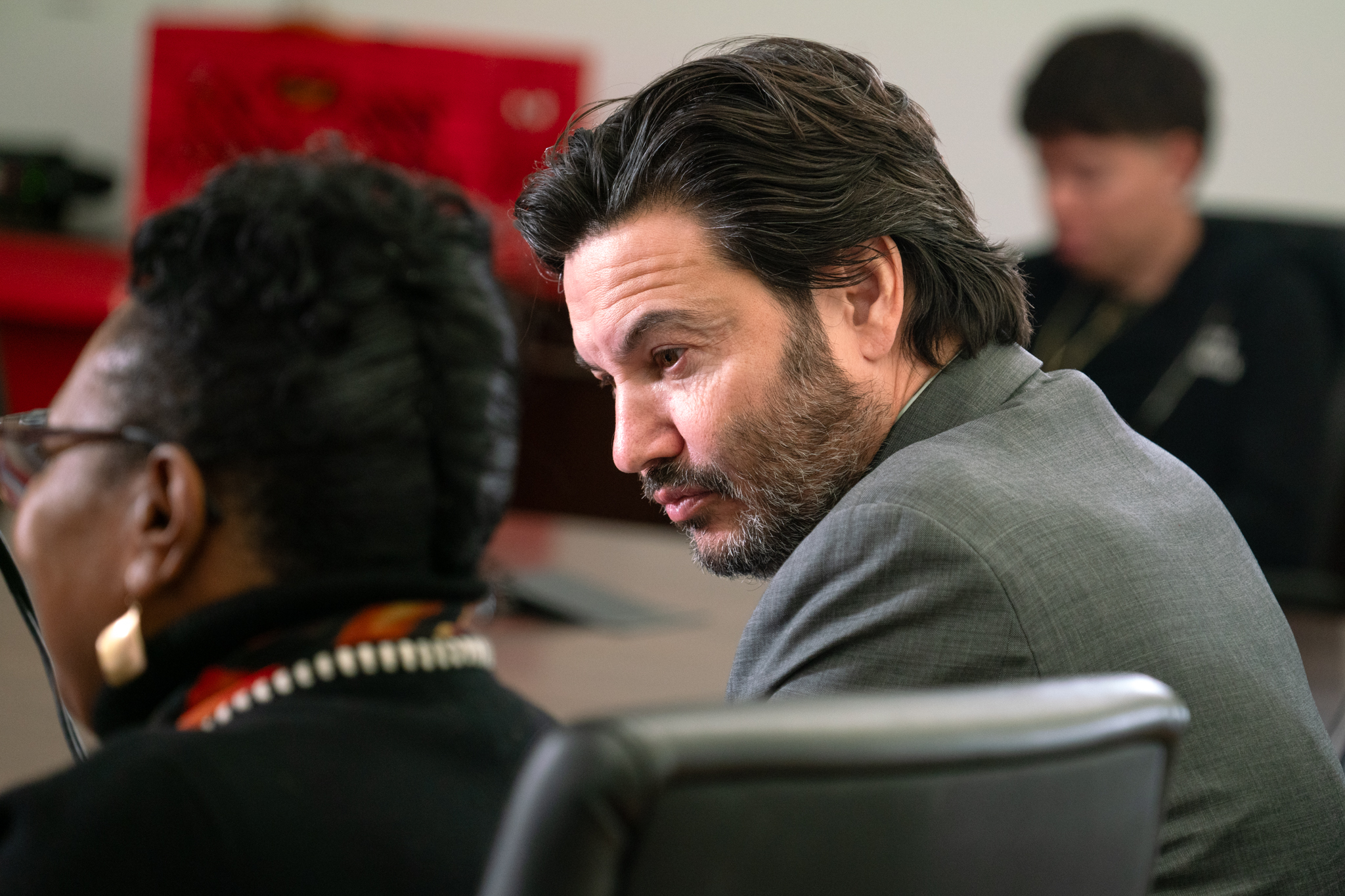
Koppell spoke about the decisions behind which buildings and programs receive funding and improvements.
Jamiel Negron | The Montclarion
Koppell explained that renovations are driven by maintenance needs and programmatic requirements, including the need for more recording arts studios.
“It’s not just a matter of maintenance; it’s also a matter of programmatic needs,” Koppell said. “In the [John J. Cali School of Music], we have a terrific recording arts program, but we’re sort of maxed out based on the studios required to do that.”
The president added that the university continually evaluates how its facilities and technology support the changing needs of academic programs.
Koppell also discussed what College of Humanities and Social Sciences students can expect amid a comprehensive restructuring, noting that no majors or academic programs have been eliminated.
“The schools are working together and they are developing lots of ideas,” Koppell said. “There have been some discussions of new degree programs that might be collaborative, new programs that are not necessarily degree programs… some very exciting ideas of things that we would launch that I think would be beneficial to students.”
The conversation also addressed the 2026 Annual Security and Fire Safety Report, which reported an increase in on-campus rape offenses from four in 2023 to 12 in 2025.
Koppell clarified that Clery Act statistics reflect when a report was made, not necessarily when an incident occurred citing increased reporting as a potential contributor to the increasing numbers.
Koppell also said recent events have led to a larger conversation about safety on college campuses.
“I think a lot of people are paying attention to it now because of the Cornell situation,” Koppell said. “Which of course I understand, and it’s appropriate, and it makes everybody think about what’s happening at [their] institution.”
He also mentioned the Empowering Our Campus grant which the university received in 2024 and its potential to support additional safety initiatives on campus.
Coleman-Carter echoed Koppell’s thoughts and her confidence in the university’s response and prevention efforts.
“The university does such a good job in our response and our preventive measures when it comes to these types of situations that we are seeing,” Coleman-Carter said. “I think people are finding it easier, not to minimize it, to report sexual assault, dating violence, and other types of situations, because they’re learning that the resources are here, they’re effective.”

President Jonathan Koppell and Vice President of Student Development and Campus Life Margaree Coleman-Carter answer questions from students.
Jamiel Negron | The Montclarion
Koppell and Coleman-Carter also spoke in detail the role of artificial intelligence (AI) in higher education.
“You can’t be silent on it,” Koppell said. “If we’re talking about in the academic realm, students should get some information upfront about what are the expectations about how AI can and cannot be used, or should be used in a particular course. We’re not mandating one approach or another.”
Coleman-Carter further elaborated the university’s stance on AI largely depends on individual faculty members and their classroom policies.
“I think AI is here to stay, and I think it’s going to depend a lot on how we use it,” Coleman-Carter said. “I think our faculty at this juncture pretty much have the power within their classrooms to decide whether or not AI will be used or not, and that is within their academic judgment to make that decision.”
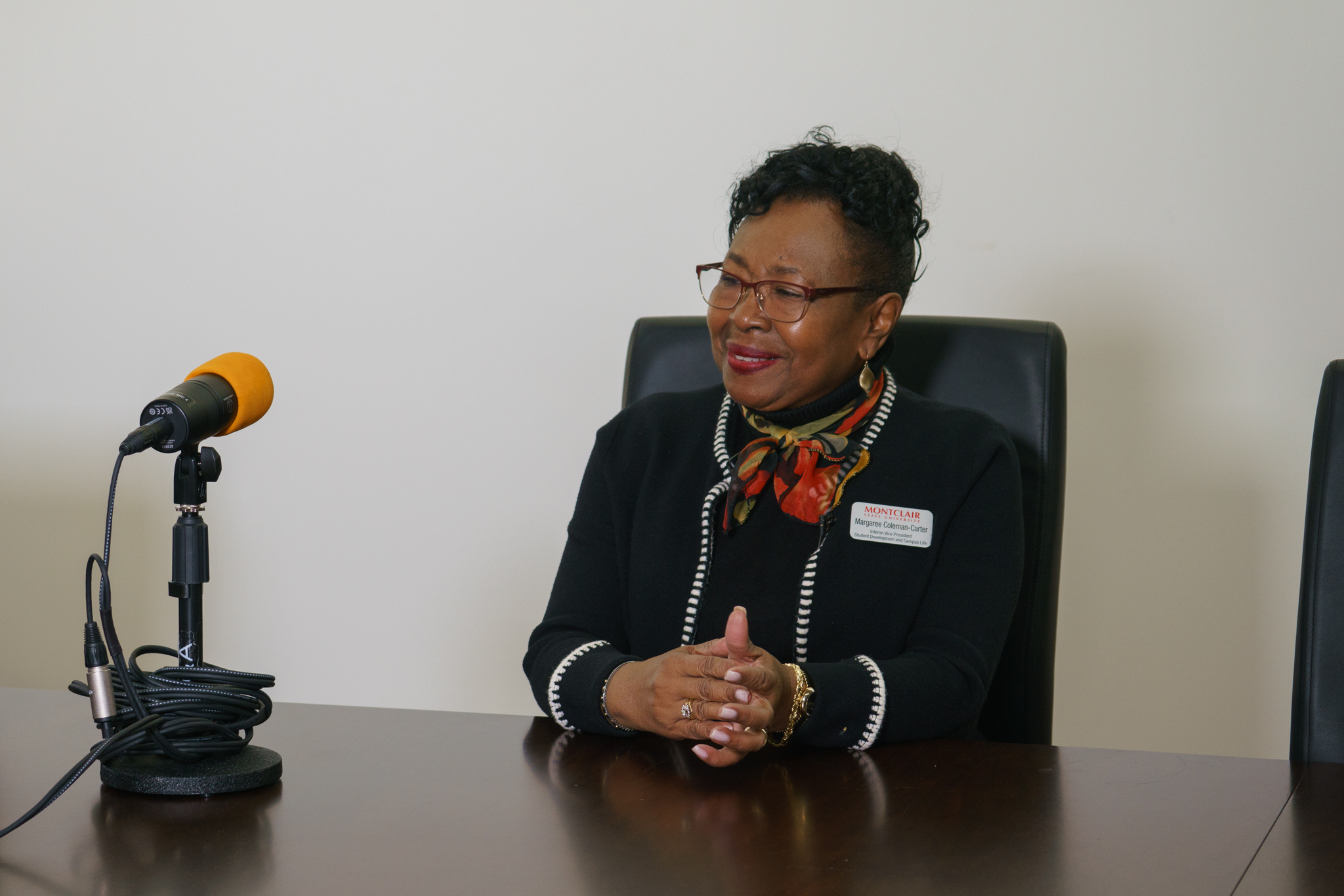
Interim Vice President of Student Development and Campus Life Margaree Coleman-Carter speaks at President Koppell's yearly student media interview.
Jamiel Negron | The Montclarion
Koppell explained how a ban on AI on campus would be unrealistic.
“We’re not going to ban all AI from the campus. I think that’s not realistic,” Koppell said. “Students use it, but we’re also not going to require it, I think there’s no one size fits all. It’s hard to imagine a ban, frankly, because it’s going to be a ubiquitous technology that people are going to use.”
He further added how the university may develop clarity on AI as it continues to evolve rapidly.