
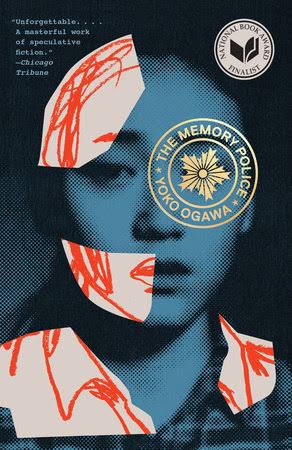
For months, I’d been meaning to read “The Memory Police”, a novel by Yoko Ogawa, and after finally getting my hands on a copy, I can say that the ice cream was not great. In fact, it was the most disappointing ice cream I’ve had in a long time.
The dystopian genre has gotten more creative and diverse over the last few decades. From political classics like “Fahrenheit 451” and “1984” to environmental dystopias like “Pink Slime” by Fernanda Trias and “Severance” by Ling Ma, writers get more and more creative with the settings of their dystopian novels.
Yet over time, readers still crave to see something new. We don’t want to see another novel about a teenager who goes against the grid, who defeats the regime and restores peace and freedom. This Katniss Everdeen prototype has been used and reused in dozens of YA dystopias, and as a lover of the genre, I was starting to get bored.
This is what made “The Memory Police” so appealing to me. The novel follows a woman who lives on an island where different objects and memories about them start disappearing. After reading the blurb online, I was immediately drawn to the story.
All the inhabitants of the island are under strict surveillance by the Memory Police, an organization that makes sure that forgotten objects are completely erased from everyday life. They sweep up any traces and mentions of things like roses, perfume, fruits, birds, and other objects that disappeared.
But there are some people on the island who, due to a genetic difference, are unable to forget these objects. Of course, by the rules of any dystopian society, these people are persecuted, hunted, and arrested. And while the unnamed protagonist of the novel is not one of those special humans, some people very close to her are, and they are in danger.
Unfortunately, the premise is the only great and interesting thing about this book. The prose of “The Memory Police” often feels bland and a little soulless, with characters recounting their emotions for the readers rather than experiencing them. It is difficult to know if this is Yoko Ogawa’s writing style or an instance of the difficulties of translating a literary text, but the prose often takes the readers out of the novel instead of immersing them in it.
It is probably the first time I was reading a dystopia and felt no sense of urgency, no anxiety or fear for any characters at all. Nothing dangerous nor life-changing happens to the protagonist, and even if there is a very tense encounter with the authorities, it is usually so fleeting and superficial that I forget about it by the next page.
But if “The Memory Police” only stuck to the very fundamental dystopian storylines and embraced its very interesting, unique premise, I would have been ready to overlook the stylistic limitations of the writing. Yet during my reading experience, I felt like nothing in the story made any sense.
The so-called rules of the world, established in the earlier pages, were completely abandoned and reshaped with no logic or explanation behind it. How the loss of memory really worked was never explained at all, which made the disappearance of some of the later objects beyond absurd. The only thing that seemed to be truly forgotten in this novel was the interesting storylines, which were cast aside in favor of the development of boring, one-dimensional relationships.
“The Memory Police” turned out to be a very big disappointment, from its failure to deliver on the premise to the style and prose of the book. The novel leaves everything in the dust of confusion and irresolution, with the protagonist’s arc not only incomplete, but unknown altogether. Instead of standing out among other novels of its genre, “The Memory Police” becomes a handbook for writers on how to write a forgettable and superficial dystopia that has no rules, no sense, and no danger in it.