
“Why can’t you stop this one little woman?” dictator Moi asked his general assembly. The better question would have been: “why can’t you stop the rain?”
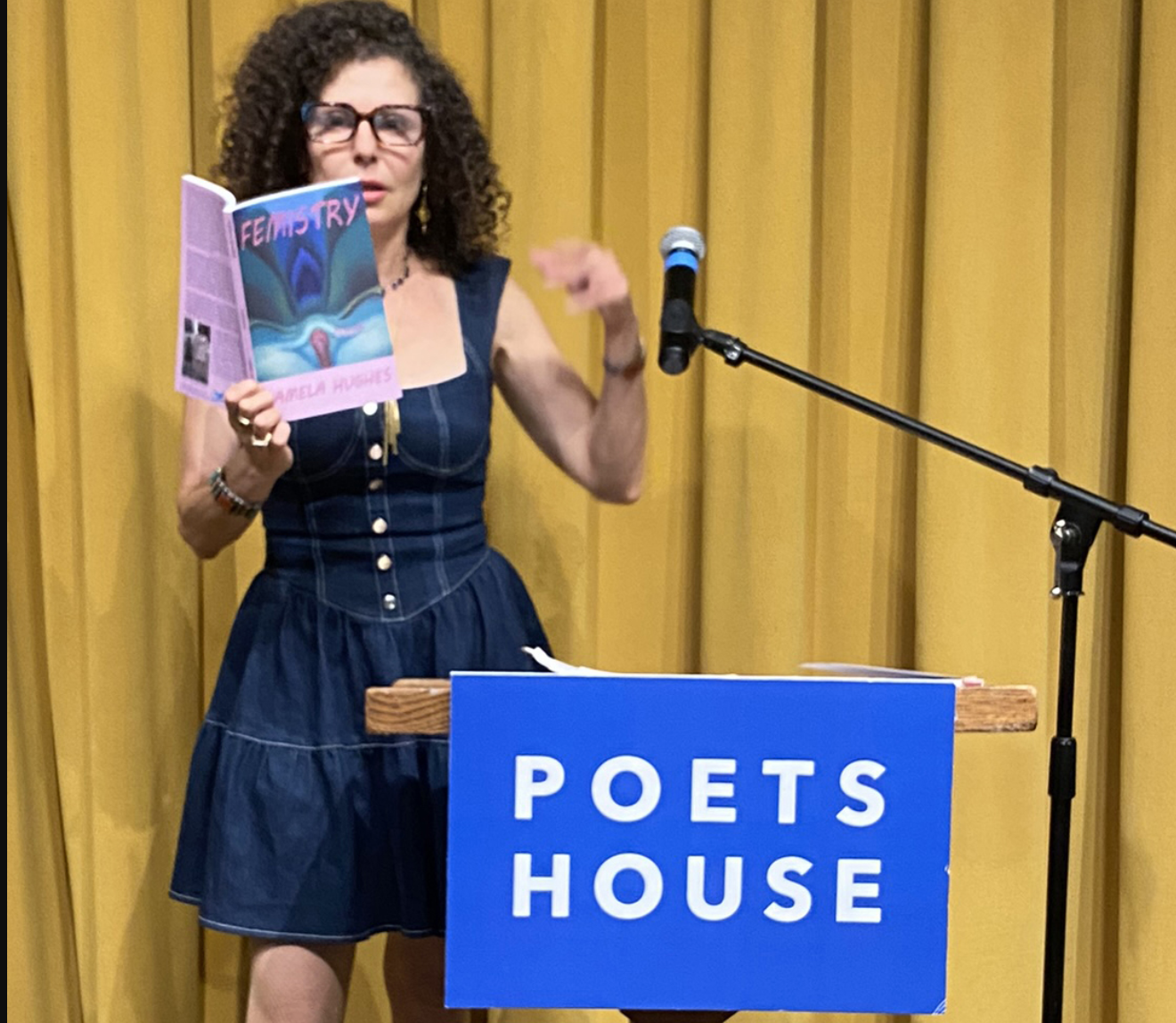
These powerful words are the last lines in a poem titled “Wangari Maathai,” part of a recently published collection of poems called Femistry by Bloomfield College of Montclair State professor Pamela Hughes.
Hughes has been teaching at Bloomfield College for over 20 years. She is passionate about the work she and her creative writing students do over the year, especially their focus on spoken word poetry during the second half of the semester in her Intro to CRW course.
“I guess you could say that the students and I are learning together,” Hughes said. “Although I’m not a spoken word poet, learning more about sonics, using word play and being more accessible with a message that advocates for justice, equity or gender issues outright, has shaped some of my poems.”
Femistry is a thoughtful collection of feminist poems. The book is Hughes’ second collection, and contains lyric and narrative poems. Hughes gave a reading at Sprague Library this past December and will participate in the Montclair State University Authors 2026 Event.
Hughes takes pride in the fact that Femistry “advocates for the empowerment and support of both women and girls.” When it comes to writing through the lens of female empowerment, Hughes expressed her wish to “honor the often disrespected and abused female body” and highlights the fact that women’s stories make up only around 0.5% of recorded history.
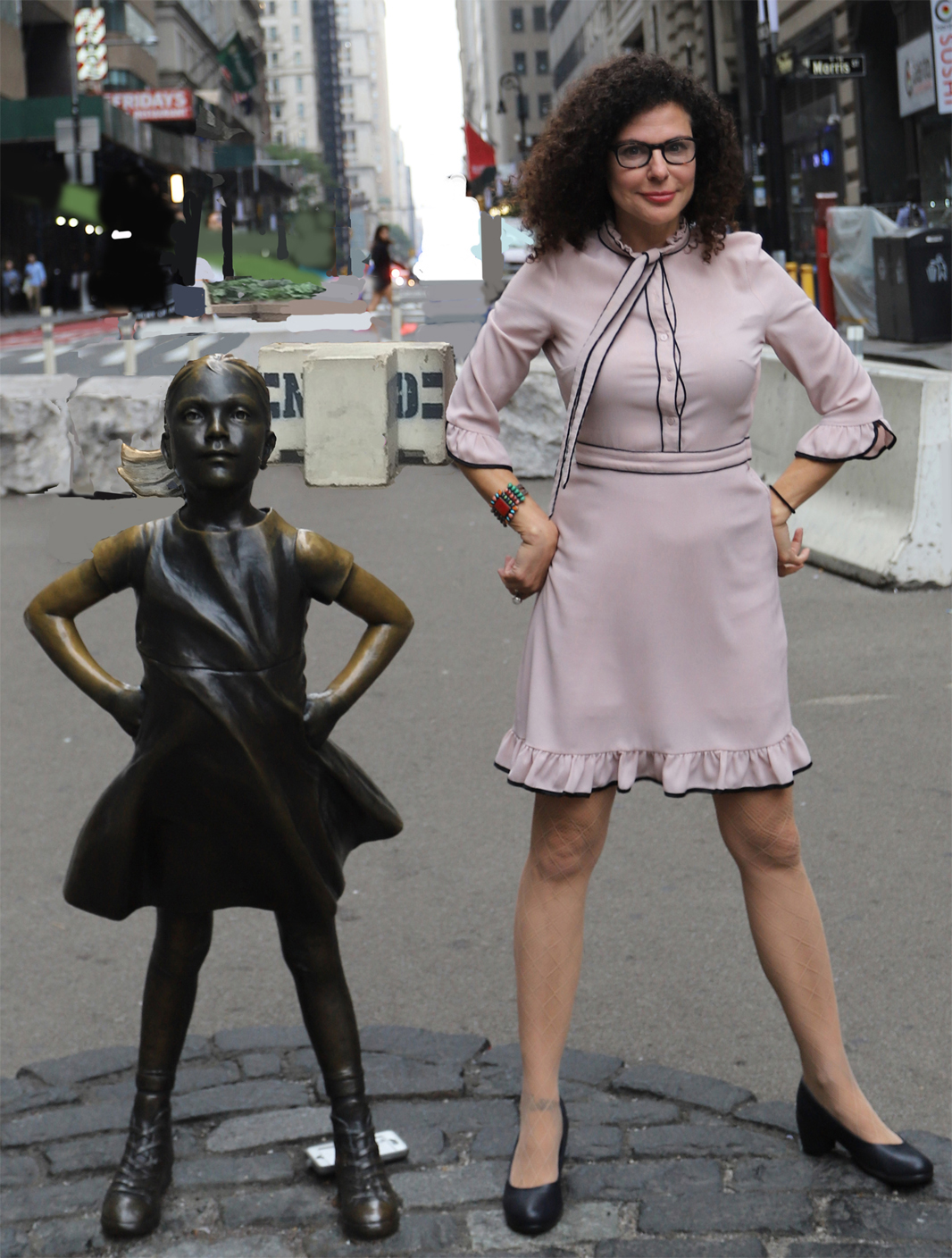
Pamela Hughes standing tall next to the Fearless Girl Statue, in New York City. Photo courtesy of Pamela Hughes
The poems in Femistry were inspired by several mythological and historical figures, including Persephone, Hatshepsut, Wangari Maathai, Emily Dickinson, Gertrude Stein and The Fearless Girl.
When asked, Hughes recalled Athena and Wangari Maathai being among the most inspiring figures to write about. She said the poem “Wangari Maathai” was written to honor her and “make sure people realize how empowering a single woman can be.” In Hughes’ class, Wangari Maathai is on a list of unsung heroes she gives her students when they are assigned to take on a persona for a narrative essay.
As for Athena, a poem in the collection titled “How the Goddess Athena Gave up War” follows the mythic as she discovers agency in her femininity.
“There seems to be a lot of body shaming in our culture, and a continued push towards aggression and war,” Hughes said. “So Athena’s voice became a counterpoint to both.”
Hughes reveals that if she could add more heroines to the list of women who inspired Femistry, she would look to Ida B. Wells and Alice Paul. She reflected on the research that went into her poems, stating that she synthesizes culture and feminism by “firstly acknowledging the complex reality of structural intersectionality and attempting to be a good ally to the world majority.”
The woman Hughes did the most research on for the collection was Queen Hatshepsut, one of the first pharaoh queens. She remembers being mindful about writing from the realm of cultural appreciation.
“Hatshepsut was a figure I came to know and honor through research and reflection as another woman from history who was erased, and reborn even more powerfully,” Hughes said.
Hughes’ poem, “Hatshepsut’s Advice to Women on How to Heal After Erasure,” includes many lines of sound advice for women like “be your own sculptor,” “write your own story,” and in its final line, “be big.”
As a poet and educator, Hughes wants her students to write their own stories. She resonates with another poet and educator, June Jordan and her book “Poetry for the People.” Like Jordan, Hughes supports her students in developing their voices while finding ways to bring advocacy and social awareness into her teaching.
Hughes created a writing course, “Conflict and Peace,” for students to explore peace movements across multiple cultures alongside justice and equity issues. She says that advocacy will always influence and have a place in her work.
“I like to hope that my words can create positive change somewhere, even have a counterbalancing effect on the whittling away of women’s, BIPOC and LBGTQ rights,” Hughes added. “Journalists, poets, and writers are the flame that keep the torch going.”
In the near future, Hughes will be writing a children’s book based on one of Femistry’s poems called “Prospera and the Mermaid.” The narrative poem is a coming-of-age story about a young girl finding self-love and a sense of agency after being bullied. She is trying to keep the magic of writing and her mermaid story alive.
To aspiring writers, Hughes said, “go for it.”
“Write what means something to you,” Hughes said. “Though each writer has a different vision, I feel that poetry should advocate for something, whether it be for feminism, environmentalism, anti-racism, LGBTQ rights or any other meaningful cause.”