
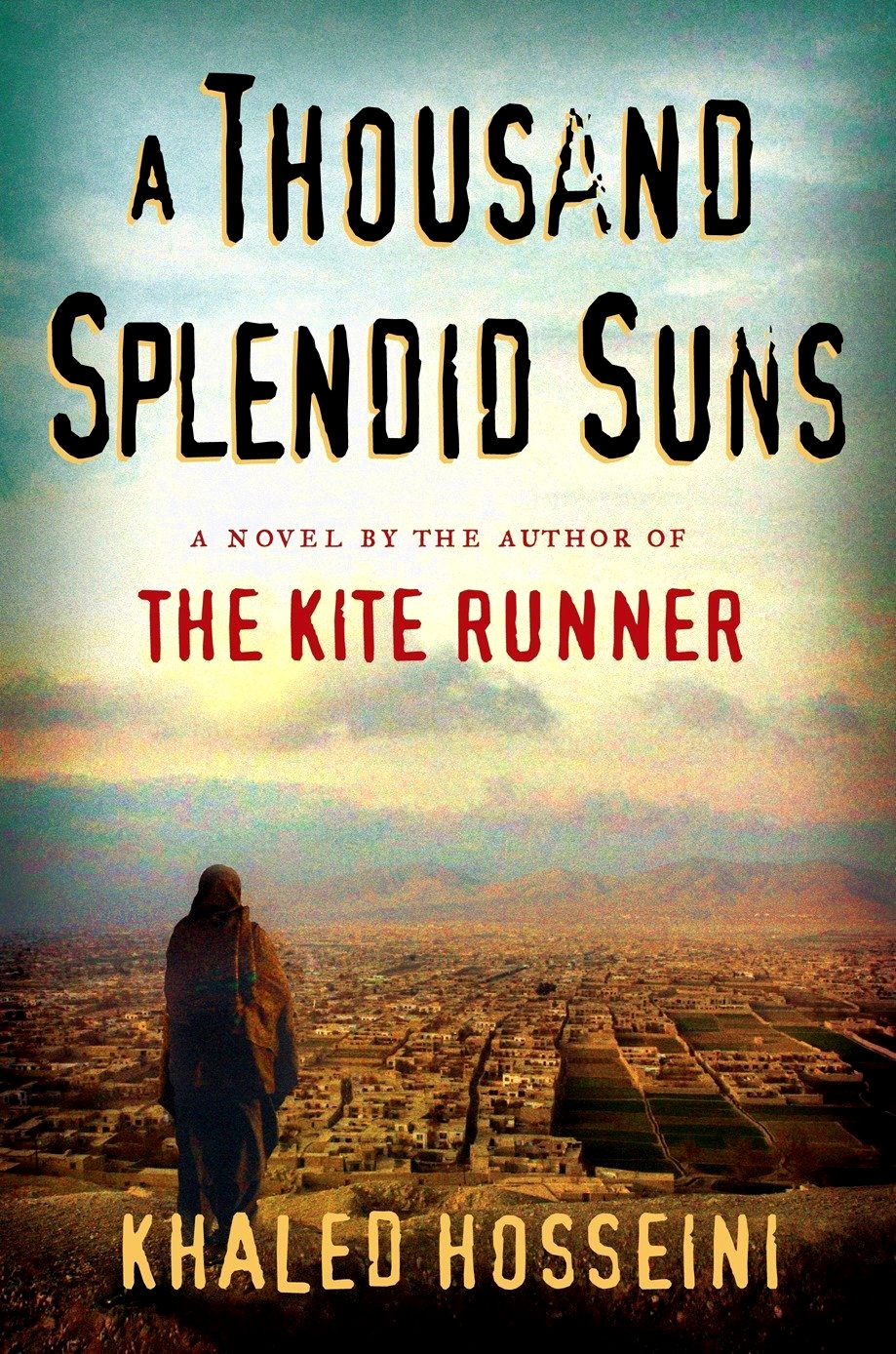
The strength of women should never be underestimated. In fact, it is easily the most powerful force on this earth. The heavy weight of what women have historically faced, and what continues to go against them in modern history, is something that should never be forgotten. This enduring spirit is exactly what takes center stage in Khaled Hosseini’s novel, A Thousand Splendid Suns.
In the seventeenth century, a Persian poet named Saib-e-Tabrizi wrote a poem titled “Kabul” after visiting Afghanistan. He described the city as a beautiful paradise filled with a vibrant culture.
In his most famous lines, he writes, “One could not count the moons that shimmer on her roofs, / Or the thousand splendid suns that hide behind her walls.” However, the events in the novel take place over the last thirty years of Afghan history, moving from the Soviet invasion to the reign of the Taliban, and finally to post-Taliban rebuilding.
As one could imagine, things changed drastically since the poet’s visit.
Khaled Hosseini uses this historical contrast to show how the historic beauty of Kabul became completely overshadowed by decades of war. Yet, despite being forced to hide behind literal and metaphorical walls, the oppressed women in this story continue to carry out that beauty and “sunshine” through their sheer resilience. Ultimately, the novel proves that while systematic oppression can tear a society apart, the unbreakable bond of female solidarity can survive even the darkest times.
Mariam is a fifteen-year-old girl who lives in a small shack just outside of Herat. She lives with her mother and is constantly reminded that she is a harami, also known as an illegitimate child. Her mother constantly warns her of the evils of men and how she cannot trust them.
Despite this, Mariam longs for a relationship with her father, who is a wealthy man but does not fully accept her as his daughter. He visits sometimes, but he never takes her back to his home. One day, Mariam makes the bold decision to leave the shack without her mother knowing to go look for her father.
While she eventually finds his house, she is ignored and rejected by both him and his three wives. Her world completely shatters when she returns home only to learn that her mother has hanged herself out of grief and despair.
Ironically, Mariam now has no choice but to stay at her father’s house, where she is not warmly welcomed. One day, she is told that she will have to marry a man named Rasheed, a much older shoemaker from Kabul. Confused, scared, and furious at the cards she was dealt in life, she finally sees the evils her mother tried to warn her about all along.
When she marries Rasheed and moves to Kabul, she is forced to live an isolated life and become the obedient wife he demands. Rasheed pressures her to produce a son, but Mariam repeatedly miscarries all her pregnancies. Following these losses, the relationship turns physically and emotionally abusive.
Just a few houses down from Rasheed’s home, a beautiful girl named Laila is born. Fourteen years later, she is living a normal life, attending school and experiencing typical teenage milestones, including a deep bond with her childhood friend Tariq. One day, her world completely shatters when she is out on her front lawn and witnesses a rocket strike her house, instantly killing her parents.
Mariam finds Laila in the rubble and brings her into their home to recover. Rasheed offers Laila refuge as war and destruction turn rampant across Kabul. However, ulterior motives are quickly put into play.
Knowing Laila is pregnant with Tariq’s child and has no surviving family left to protect her, Rasheed decides to marry her. Soon, Laila finds herself trapped in the exact same cycle of isolation, experiencing the full weight and wrath of Rasheed’s abuse.
The chaos inside the household directly parallels the chaos of the war outside. Mariam and Laila initially act as rivals, with Mariam feeling like Laila stole her husband, and Laila growing tired of Mariam treating her so harshly. At the end of the day, systemic oppression keeps both women from making their own decisions or escaping their reality.
However, as the abuse intensifies, the rivalry transforms into a profound bond of female solidarity as they experience the exact same hardships together. They find comfort in one another and develop a deep sisterly and mother-daughter relationship to survive. One day, they make a risky decision that will change the trajectory of their lives forever.
Reading this story was truly life-changing for me. I felt an incredible sense of sadness knowing that many women today still struggle in the exact same way under Taliban rule, yet I also felt a deep sense of pride to be part of womanhood as I stand in solidarity with them from afar.
Khaled Hosseini wrote so many beautiful lines that I have highlighted and marked all over my notebook, making the entire novel a masterpiece. If you are looking for a powerful narrative built on the foundation of womanhood and strength, you must read Mariam and Laila’s story.